Imaging · London
Wide-bore MRI in London, for comfort and space.
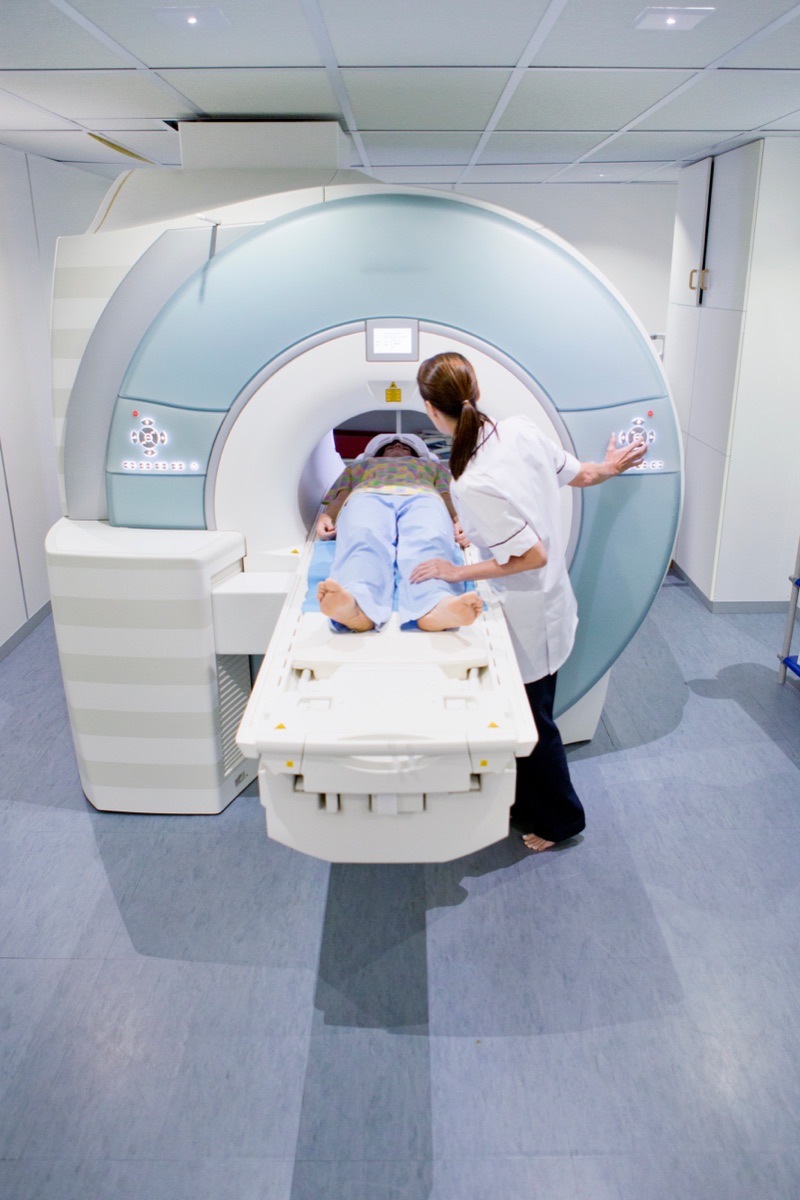
A roomier scanner with an opening around 70cm - easier for larger, claustrophobic or anxious patients, with no loss of image quality.
Indicative pricing
What a wide-bore MRI costs in London.
Indicative ranges across UK private providers.
In short
£300-£600, reported in 24-72 hours.
| Scan type | Indicative range | Typical duration | Report turnaround |
|---|---|---|---|
| Wide-bore MRI (single region) | £300–£600 | 20–40 min | 24–72 hrs |
| Wide-bore MRI with contrast | £450–£850 | 40–60 min | 48–72 hrs |
| Two regions | £500–£900 | 40–60 min | 24–72 hrs |
| Bariatric-friendly protocol | Quoted case by case | Varies | 24–72 hrs |
| Paediatric on wide-bore | Quoted case by case | Varies | 48–72 hrs |
| Second-opinion read (existing scan) | £250–£450 | Report only | 48–72 hrs |
Prices vary by clinic, time of day, scanner field strength (1.5T vs 3T), and whether contrast is used.
The problem
A standard scanner is not built for every body.
Broader shoulders, a higher weight or a fear of enclosed spaces can make a standard MRI difficult. A wide-bore scanner solves most of that; same image, far more comfort.
-
Claustrophobic?
Wide-bore helps a lot; if it is not enough, open MRI or a mild sedative may be suggested.
What it shows
Who a wide-bore scanner helps.
Wide-bore is for anyone who finds a standard scanner tight or stressful - and it works for routine scans too. Here is who it helps most.
-
Claustrophobia
A wider opening and more light make the scan far easier to tolerate.
-
Larger patients
A bigger bore (around 70cm) accommodates broader shoulders and higher weights.
-
Anxious patients
More space, music and a companion nearby help you stay calm and still.
-
Children & older patients
Extra room and reassurance suit children and less mobile patients.
-
Any routine scan
Wide-bore does the same job as a standard scanner for most examinations.
-
With or without contrast
Contrast studies run on wide-bore scanners just as they do on any other.
-
Without losing quality
Modern wide-bore 1.5T (and some 3T) scanners give excellent images.
Good to know
What to know about wide-bore MRI.
What each option on your referral is actually for.
-
A wider opening
Around 70cm across, noticeably roomier than a standard 60cm bore.
-
Not fully open
Roomier, but still a tunnel. For a truly open design, see open MRI.
-
Same image quality
Modern wide-bore scanners give the same diagnostic images.
-
Contrast is fine
Any contrast study can be done on a wide-bore scanner.
-
When open is better
For severe claustrophobia, open or upright MRI may be suggested instead.
Safety and eligibility
One of the safest tests in medicine.
For wide-bore, the key checks are the table weight limit and whether a truly open design would suit you better.
-
Pacemakers, defibrillators, neurostimulators
Many modern devices are MR-conditional.
-
Aneurysm clips and vascular coils
Model and date of insertion matter. The scanning centre will need this from your hospital.
-
Metal fragments (eye, shrapnel)
May need a prior orbit X-ray.
-
Joint replacements, stents, plates
Almost always fine. May cause local artefact but rarely a safety concern.
-
Still a tunnel
Wide-bore is roomier but not fully open. If that is not enough, open MRI may be suggested.
-
Pregnancy
No ionising radiation. Generally safe, particularly after the first trimester. Contrast avoided unless essential.
-
Kidney function
A recent eGFR is needed if gadolinium contrast is planned.
Reading your report
A report can look intimidating. It isn't.
Wide-bore or not, the report keeps to the same four parts.

A quiet reminder
The report is written for your doctor, not for you - and that is normal.
If you would like it explained before your follow-up, ask your GP or specialist.
- 01 Header
Your details and the question
Your details, the scan performed, and that it was done on a wide-bore scanner.
- 02 Technique
How the scan was done
Which sequences were used. Wide-bore does not change the image - only the comfort.
- 03 Findings
What the radiologist saw
A structured description of the region imaged, including any incidental findings.
- 04 Impression
The conclusion: read this first
The conclusion in brief - read this first. Your specialist discusses it in context.
Recognised by major UK insurers
Frequently asked
Common questions about wide-bore MRI.
Quick answers on cost, referrals, contrast, claustrophobia and results.
-
What is a wide-bore MRI?
A scanner with a larger opening - around 70cm across, versus about 60cm on a standard machine. The extra space makes it easier for larger, claustrophobic or anxious patients.
-
Will I fit in a wide-bore scanner?
Most people who struggle with a standard scanner are comfortable in a wide-bore one.
-
Is a wide-bore MRI fully open?
No - it is roomier but still a tunnel.
-
Does the image quality suffer?
No. Modern wide-bore 1.5T and 3T scanners give the same diagnostic image quality as standard machines.
-
What is the weight limit?
It varies by scanner, but wide-bore machines take higher weights than standard ones.
-
Is it good for claustrophobia?
Yes - the extra space and light help a lot.
-
Can children have a wide-bore scan?
Yes - the extra room and a parent nearby make it easier for children. Paediatric scans are best done at child-friendly clinics.
-
Do I need a referral?
Most scans accept self-referral.
-
How quickly will I get results?
A consultant radiologist report is usually ready in 24-72 hours. With your consent, the report and images can be shared with your GP or specialist.